Tree work around homes in Streetsboro is rarely just about looks. The way roots, soil, water, and concrete interact can quietly shape the life span of your foundation, driveway, and walkways. When those elements fall out of balance, you start to see cracks, settling, and heaving that are far more expensive to fix than a pruning or removal job.
Having worked with property owners across Portage County and neighboring communities, I have seen how a thoughtful tree service plan can prevent thousands of dollars in structural repairs. The key is understanding what trees are doing below the surface, and then managing them with a clear strategy rather than one urgent call at a time.
Why Streetsboro properties are vulnerable
Streetsboro sits in a zone where climate and soil put extra pressure on hard surfaces. Winters are freeze heavy, summers can swing from very wet to quite dry, and many neighborhoods have compacted or clay rich soils under lawns and driveways. That combination sets up a few predictable problems.
Clay soil swells when it takes on water and shrinks when it dries. Tree roots respond to that cycle by chasing reliable moisture sources. In a dry spell, roots naturally move toward foundations, downspouts, and the wetter soil under paved driveways. Over several seasons this gradual migration can disrupt both soil structure and concrete slabs.
On top of that, older subdivisions often have large, mature maples, oaks, ash, and sometimes silver maples that were planted far too close to homes by previous owners or even original developers. What looks like a pleasant shade tree beside a driveway in year five can become a 60 foot giant in year thirty, with roots reaching well under the concrete and shrub beds.
Professional tree service in Streetsboro is less about aggressive removal and more about reading these site conditions early and intervening before those predictable patterns turn into foundation repairs.
How tree roots really interact with foundations and concrete
There is a persistent myth that roots “break through” solid concrete. In practice, healthy roots prefer to occupy soil that already has air and moisture. They typically do not drill straight into solid, intact concrete. The way they damage foundations and driveways is more indirect, but no less serious.
Roots expand as they grow. When they encounter a small crack, poorly compacted fill, or a joint between two slabs, they slowly widen that weak point. Tree roots are persistent but patient. Over years, that gentle pressure lifts slabs, separates joints, and opens gaps that allow water and freeze damage to accelerate the problem.
More often, roots change the soil rather than the concrete itself. They dry out certain zones, increase organic matter in others, and create air spaces. In clay soils, that constant change in moisture and density leads to uneven settling. The house foundation or the driveway slab rides on that moving soil. That is why you might see a driveway start to dip near a big maple, or a corner of the garage floor shift slightly even when the concrete looks sound.
Experienced arborists and tree service crews pay close attention to three specific interactions between roots and structures:
Soil moisture extraction near foundation walls, which can cause the surrounding earth to shrink and settle. Physical displacement of pavers and slabs by thickening surface roots, especially near driveways and sidewalks. Exploitation of existing weaknesses, such as hairline cracks or poorly compacted backfill, that roots slowly widen.None of this happens overnight, which is the good news. It means that with proper assessment and timely tree trimming or tree removal, those long term issues can often be managed or entirely avoided.
Street trees and driveway damage in practice
Driveways in Streetsboro take a lot of abuse. Between snow removal, salt, freeze thaw cycles, and vehicle weight, they have more than enough to contend with even before tree roots are added to the mix.
You typically see three patterns when trees and driveways do not get along:
The first is surface heaving on asphalt or older concrete. Roots of shallow rooting species, such as silver maple or some ornamental pears, spread close to the surface. As they thicken, they can lift sections of asphalt or cause individual concrete panels to tilt relative to their neighbors. Homeowners often notice this as a subtle bump when driving in, or as pooling water in new places after a rain.
The second is cracking near the base of a trunk that sits just off the driveway edge. A tree that was planted too close to the pavement will direct most of its structural roots into the surrounding lawn. When one or more of those major roots runs under the drive, frost action, root growth, and soil movement combine. Hairline cracks spread outward from the trunk side of the driveway.
The third is more hidden: soil loss and erosion along the edges of a concrete or paver drive when dense canopy blocks sunlight and grass fails. Bare soil, exposed roots, and water runoff work together to wash out support at the slab edges. Over a few seasons, unsupported corners chip, settle, or break.
A team used to tree service in Streetsboro will have seen these patterns many times. That experience matters because the best solution is not always to cut the biggest root or remove the whole tree. Sometimes a blend of crown reduction, targeted root pruning, and soil stabilization around the drive can bring the situation back under control without losing the tree.
How foundations react to trees close to the house
Foundations can be more forgiving than people think, yet once they are compromised, repairs are expensive. The way trees influence foundations in this region generally falls into two categories: moisture imbalance and physical disturbance.
Moisture imbalance is subtle. A large, thirsty tree planted very near the house will draw more water out of the soil adjacent to the foundation than the rest of the yard. In expansive soils, the drying effect can cause that soil to contract. The foundation wall, Home page particularly if it sits on variable backfill, may experience a slight loss of support along part of its length. Over time, this can result in minor cracking or tilting.
Physical disturbance happens when roots seek the path of least resistance, which is often the backfilled trench around the foundation, not the undisturbed soil farther out. Backfill is rarely as compacted as native soil. Roots easily colonize that zone and then enlarge. Years later, you might see stair step cracks in masonry, floors that are slightly out of level near exterior walls, or doors that stick seasonally.
Tree removal near a house needs to be handled carefully for a related reason. Taking out a large, mature tree that has been regulating soil moisture next to a foundation can trigger rapid changes in that soil. Without foliage to draw water, the ground may become wetter and swell, particularly if downspouts discharge nearby. That is one reason thoughtful companies like Maple Ridge Tree Care look not just at the tree, but at drainage, grading, and soil conditions before they recommend full removal versus staged pruning.
What professional tree service actually does differently
From conversations with homeowners, I know many are not sure where the value lies between hiring a professional crew and having a neighbor with a chainsaw help out. When the goal is protecting foundations and driveways, the difference tends to show up in five areas: assessment, precision, timing, safety, and coordination with other trades.
Assessment comes first. A seasoned arborist or estimator walks the property with an eye for patterns. Instead of looking only at what branches hang over the roof, they look at how the trunk leans, where the major roots likely run, how close hardscapes are to the drip line, and what the soil and drainage patterns are. In Streetsboro, they will factor in how freeze thaw cycles hit your particular slope and exposure.
Precision is most obvious during tree trimming. Poorly done trimming can shift weight to the wrong side of a tree, encourage weak new growth, or leave large, ragged wounds that invite decay. All of those outcomes can make the tree more likely to fail in a storm, sometimes toward the house or driveway you are trying to protect. Proper cuts, correctly spaced, keep the canopy stable and the root system in balance.
Timing means intervening before visible damage escalates. That may mean recommending tree removal Streetsboro homeowners have been delaying because the tree “still looks fine.” It can also mean advising lighter but more frequent pruning on fast growing trees, rather than waiting 10 years and asking the tree to tolerate major surgery in one visit.
Safety becomes obvious when heavy limbs are being lowered near a roof or when a trunk is being felled in a confined yard. Controlling where sections fall, and how vibration transmits into nearby structures, is a skill. Using cranes when appropriate, or rigging limbs down by hand rather than dropping them, can reduce shock to nearby slabs and walls.
Coordination with other trades is where good tree service really shines. A company that knows local foundation contractors, concrete installers, and landscapers can plan work in a logical order. That might mean removing a problem tree one season, monitoring soil changes, and only then scheduling significant driveway repair, so new concrete is not poured over still moving ground.
Tree trimming as preventive maintenance
Tree trimming is sometimes dismissed as cosmetic, but from a structural perspective it has real value. A balanced, well maintained crown distributes wind load more evenly into the root system. That means less rocking and fewer micro movements in the soil near foundations and paved areas.
Reducing weight on long, cantilevered limbs that stretch over a driveway or roof lessens the leverage those limbs have on the trunk during storms. When a large, unbalanced limb sways, it can transmit surprising force down the stem and into the root zone. Over time, that can aggravate soil movement near foundations.
Professionals trained in tree service Maple Ridge Tree Care style look at:
- Selective thinning to allow wind to pass through the canopy rather than hitting it like a solid sail. Reducing end weight on key branches that hang over vulnerable areas. Removing dead, weakened, or diseased limbs that are more likely to drop during ice and wind events. Preserving strong, well attached scaffold branches that keep the tree structurally stable. Maintaining clearance from roofs, gutters, and siding to reduce moisture problems closer to the house.
Those trimming tactics do more than protect from falling branches. They stabilize the tree, which in turn minimizes root disturbance in the soil supporting your structures.
When tree removal is the safer option
No homeowner wants to lose a mature shade tree if it can be saved. Yet there are times when the best protection for your foundation or driveway is planned, professional tree removal.
Red flags that often justify serious discussion include a large tree planted within 10 to 15 feet of a foundation, repeated heaving or cracking of nearby concrete despite previous repairs, obvious trunk decay or serious lean toward the house, and surface roots actively lifting sidewalks or driveway panels that see heavy daily use.
Responsible companies that focus on tree removal Streetsboro wide will talk through those conditions honestly. They should be able to explain why partial measures such as root pruning alone might only delay, rather than solve, the problem. They will also discuss how removing the tree will affect drainage and sunlight, so you can plan for new plantings or hardscape changes that keep soil conditions stable.
Choosing removal is often easiest to justify when you compare long term costs. Repeated patching of a driveway every couple of years, or injecting epoxy into foundation cracks, quickly adds up. A single, carefully planned removal, coupled with a new planting set at a safer distance, can be the more economical and structurally sound choice over the life of the property.
Root pruning and root barriers: helpful but not magic
Homeowners often ask whether they can simply cut offending roots away from a driveway or foundation. Root pruning is a valid tool, but it must be done with respect for the tree’s biology.
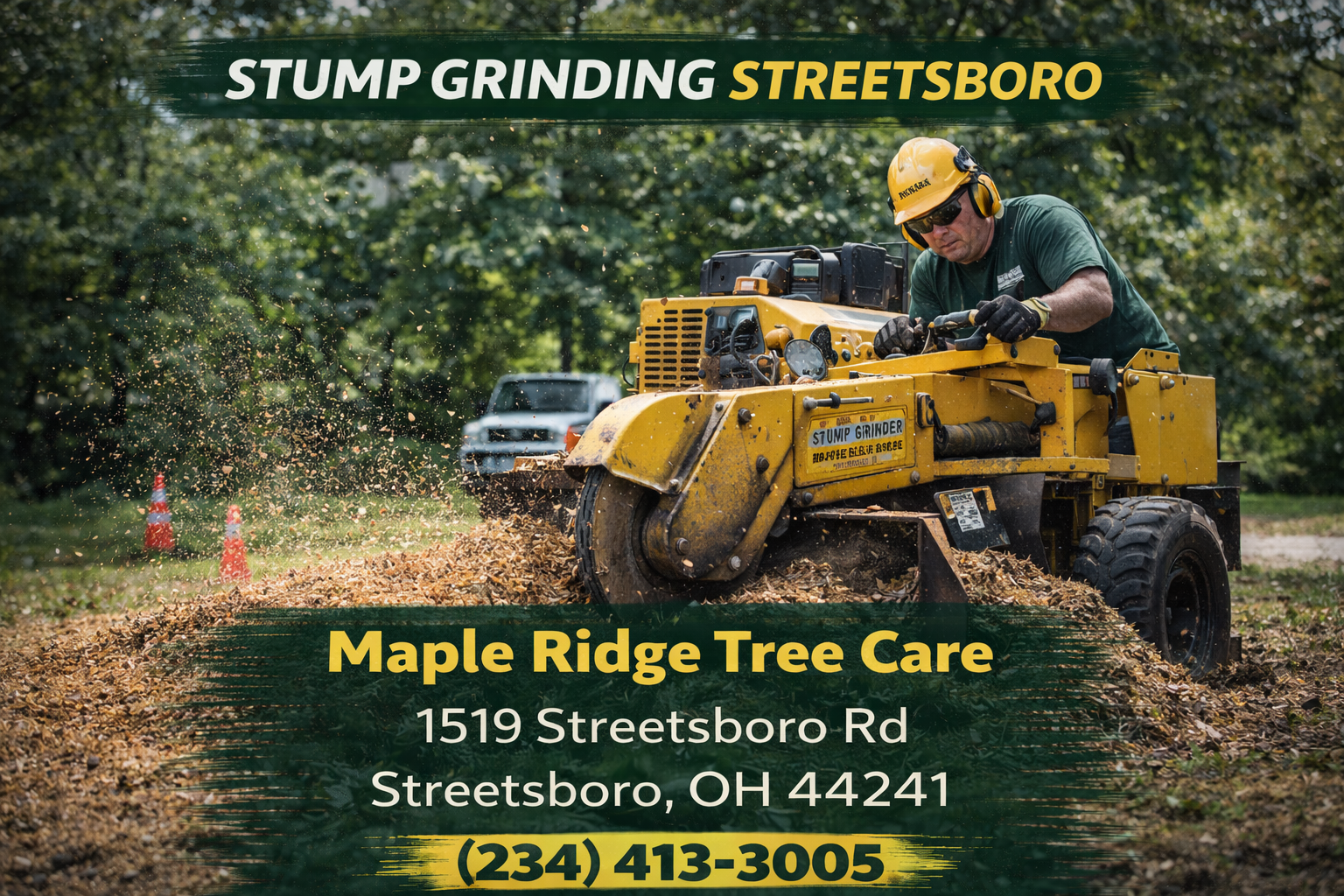
Removing too many structural roots on one side can destabilize the tree. That instability might not be obvious on a calm day, but during a wet, windy storm the tree can fail at the base. A skilled arborist will identify which roots provide main anchorage and which are smaller enough to cut with acceptable risk.
Root barriers are sometimes installed between a tree and a hard surface. These are physical or chemical barriers set vertically in the ground that encourage roots to grow deeper or away from a structure. They are most effective when installed early in a tree’s life, or during new construction. Around mature trees in existing yards, they have to be used cautiously to avoid damaging too many roots at once.
Where root pruning or barriers are appropriate, they are almost always paired with other measures: improved drainage away from the foundation, stabilized soil along driveway edges, or light crown reduction to offset some loss of roots. As with most tree service interventions, context makes the difference between a safe fix and a risky shortcut.
Warning signs Streetsboro homeowners should watch for
You do not need specialized training to spot early indicators that trees may be affecting your foundation or hardscapes. Paying attention to subtle changes once or twice a year goes a long way.
Here are practical signs to watch for around your property:
- New or widening cracks in driveways, especially near tree lines or trunk bases. Sections of sidewalk or driveway that start to tilt, creating raised edges or trip hazards. Doors or windows that begin sticking seasonally, particularly on the side of the house nearest large trees. Visible surface roots that are increasingly exposed or lifting soil around walkways and patios. Persistent damp spots or erosion channels near foundation walls beneath dense tree canopies.
If you notice more than one of these symptoms on the same side of the property as a significant tree, it is worth scheduling a professional assessment. The earlier those patterns are understood, the more options you have short of major removal or costly structural repair.
How a Streetsboro tree service visit usually unfolds
Homeowners sometimes hesitate to call because they picture an immediate push for removal or extensive work. A typical visit from a reputable tree service in Streetsboro is more conversational and diagnostic.
The process often starts with a walk around the property. A good estimator will ask what has changed since you bought the home, whether you have noticed new cracks, water in the basement, or shifting in pavers. They will look at your trees not just as isolated organisms, but as part of a larger system that includes soil, structures, and how you actually use the space.
From there, they might suggest a stepwise plan. That can include modest crown thinning on one or two problem trees this season, monitoring of specific cracks over the next year, and potential removal of a high risk tree if conditions worsen. They might advise bringing in a foundation specialist or concrete contractor for a second opinion before you commit to larger projects.
The point of that approach is balance. Trees provide real benefits in shade, cooling, privacy, and aesthetics. A thoughtful plan tries to preserve those benefits while protecting the expensive pieces of your property that sit under and around them.
Practical steps homeowners can take between professional visits
Day to day, there is a lot you can do yourself to keep trees from becoming a threat to your foundation and driveway, even before any formal tree service visits.
Simple, effective habits include:
- Watering trees deeply but not constantly, to encourage deeper rooting rather than shallow surface roots that lift pavements. Maintaining a mulch ring around tree trunks, set back from concrete edges, to reduce mower damage and stabilize soil moisture. Keeping gutters and downspouts clear so water is carried well away from both trees and foundation walls, avoiding saturated zones. Avoiding heavy vehicle parking directly over known root zones near large trees to prevent compaction and root stress. Planting new trees at appropriate distances from the house and hardscapes, based on their mature size rather than nursery size.
These habits do not replace tree removal or professional tree trimming where necessary, but they dramatically reduce the chance that your next call to a tree service is prompted by an emergency.
Why local experience matters
Tree species that thrive in Streetsboro, from red oaks and sugar maples to Norway spruces and ornamental pears, behave differently than desert or coastal species you might read about online. Local experience with common pests such as emerald ash borer, with regional storm patterns, and with local soil types makes a difference in the advice you receive.
A company like Maple Ridge Tree Care, which focuses on tree service Streetsboro and the nearby townships, learns over years which combinations of trees, soils, and construction practices tend to lead to driveways heaving or foundations settling. That pattern recognition lets them spot trouble early on properties that look fine to an untrained eye.
That local knowledge also informs the realistic options they offer. For instance, they will know how well a replacement tree species is likely to perform in your specific neighborhood, which affects how far from the driveway it should be placed, how aggressively it will root, and how often it will need trimming.
Careful tree service is not just about felling and pruning. It is about understanding how living roots, shifting soil, and rigid concrete coexist over decades. In a place like Streetsboro, where weather, clay soils, and mature trees all share the same yard, that understanding is what keeps foundations stable, driveways smooth, and your investment secure.